As the decade draws to a close, have you taken time to look back on your life for the past 10 years? It’s an interesting exercise. We can feel proud of ourselves for the challenges we’ve overcome (or at least survived) and the progress we’ve made toward goals and get inspired to set new goals for the new year.
Can you believe how fast the decade has flown by? Everyone marvels at how quickly time passes and it’s not just older folks. Young people notice it too. Ask some young adults and see what they say.
I think it’s due to the fact that everything around us is changing and evolving so quickly. That’s especially true with technology. Not only does it change rapidly, but it often radically changes the way we live our lives. What was life like before email, cell phones and Facebook? And now Uber, streaming video, Echo and Google Home?
I really enjoyed this article by PC Magazine and I think you will too.
You may not have heard of some of them but that’s fine. Enjoy the ones you do know, like iPads, smart watches, Windows 10 and Chromebooks.
The Most Iconic Tech Innovations of the 2010s “As the decade winds down, we round up the most important and innovative products, trends, and breakthroughs that have shaped how we use technology.”
And this brings up the issue of feeling stupid…
So many clients tell me they are stupid when it comes to technology and I always tell them, “That’s not true! You just feel stupid because there is so much new information and vocabulary to learn at one time.”
“It’s not even a matter of not having learned computers in school. Things wouldn’t be the same now anyway. I can barely keep up! If I were off the grid for 6 months or more, I’d probably feel stupid too.”
Here’s an inspiring quote from Seth Godin that speaks to this…
The Fear of Stupidity
“Stupid is not uncommon. Stupid is the way we feel when working on a difficult problem. Stupid is the emotion associated with learning—we are stupid and then we are not. The pre-learning state is stupidity. A scientist might work ten years on solving a problem of math or logic or biology. Or a lifetime. And until the problem is solved, she’s stupid. And then she isn’t. Which is all fine, actually. The problem comes with the emotion that we’re supposed to feel when we feel stupid: Fear. We are supposed to be afraid of stupid, to get stupid over with as soon as we can. Change, of course, makes everyone feel stupid, because change breaks all the old rules, inventing new ones, rules we don’t know (yet). And so the equation is obvious: Change —> Stupid —> Afraid. One way to avoid this is to avoid change. One way to avoid this is to avoid freedom. The best way to avoid this is to embrace stupid and skip the last part. There’s nothing to be afraid of. Nothing except avoiding the feeling of stupid. And stupid is a good thing.”
May you embrace “stupid,” embrace change, embrace continuing education and have an amazing 2020!
Enjoy!
Mardi
What do you think about the changes in the past decade and are you over feeling stupid for feeling stupid sometimes? I’d love to see your thoughts in the comments sections below…
Receive notifications about all my Techie Tips as soon as they become available by signing up here.
Do you feel still feel stupid sometimes when it comes to technology?
People often tell me, “I’m so stupid when it comes to technology and I’m always quick to say, “You’re not stupid, you just need a little education!” I hate to see them so down on themselves or convinced that there is something wrong with them because of their age. It’s not true!
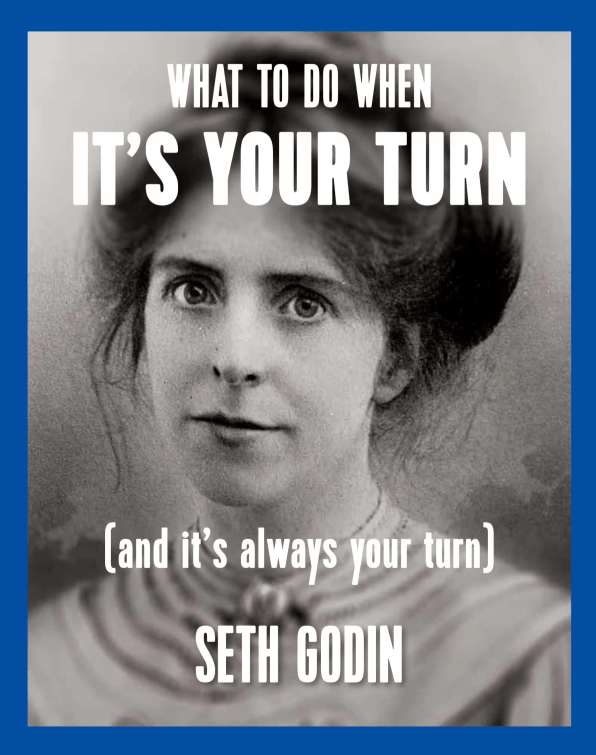
Well, I recently, I discovered a new book by Seth Godin which gave me a new perspective on stupid. I hope you find it as helpful as I do, put your thoughts in the comments below, and share this post with your friends so they can feel good about feeling stupid too.
The fear of stupidity is not uncommon. Stupid is the way we feel when working on a difficult problem. Stupid is the emotion associated with learning—we are stupid and then we are not. The pre-learning state is stupidity. A scientist might work ten years on solving a problem of math or logic or biology. Or a lifetime. And until the problem is solved, she’s stupid. And then she isn’t. Which is all fine, actually. The problem comes with the emotion that we’re supposed to feel when we feel stupid: Fear. We are supposed to be afraid of stupid, to get stupid over with as soon as we can. Change, of course, makes everyone feel stupid, because change breaks all the old rules, inventing new ones, rules we don’t know (yet). And so the equation is obvious: Change —> Stupid —> Afraid. One way to avoid this is to avoid change. One way to avoid this is to avoid freedom. The best way to avoid this is to embrace stupid and skip the last part. There’s nothing to be afraid of. Nothing except avoiding the feeling of stupid. And stupid is a good thing.
P. S. Who do you know that would feel better about themselves if they had a little computer tutoring. Just send me their name and number. I’ll follow up and take good care of them. Thanks!
The world is changing rapidly these days, largely due to technology. My goal is to help people adapt as simply, easily and affordably as possible.
Perhaps thinking about the situation in a different way will help you feel better about changes.
We can’t turn back the clock or stop technological evolution, but we can control how we respond.
We can choose to resist what is, get upset, refuse to change and be continually frustrated, or we can do what we need to do to make things work and make ourselves happy.
Think about the things you wouldn’t be able to do if it weren’t for technology. Make a list of all the ways you benefit.
Then remember that in order to benefit, you will need to invest in equipment and maintenance from time to time, just like you do with your house appliances and automobile.
Here’s a good analogy:
How old is your car? (Is it as old as your computer?) If your mechanic said it wasn’t possible to get parts to fix it because it’s too old, would you insist on driving it anyway? It it couldn’t pass a smog check, would you drive without registration?
Computers and technology may become obsolete faster than cars, but the principle is the same. There comes a time, when it’s more effective to change than to hold on to the old. Sometimes that requires a little education, similar to taking continuing education courses for professional certifications or learning how to use a new TV. You just get a little instruction and enjoy the benefits of the new information.
I hope thinking about technology in this way will help you feel better and inspire you to change your equipment or way of doing things when necessary.
If you need help to decide on the best equipment and apps for your individual needs and instruction on how to use them, just let me know. I promise to make it as simple, easy, affordable and fun as possible.
If this has been helpful to you, please share below so everyone can feel better about changes too.
Be the first to see now blog posts. Sign up for email notifications below:
Learning new computer and gadget skills is as much about overcoming “fears” as it is about learning skills. Most of my clients express some version of “I feel so stupid, or I’m afraid I’ll break it, or I’m too old to be able to do this.” When we try new things for the first time we often experience fear of failure, but my clients inspire me everyday as they “step up to the plate,” face their fears and move forward! As they learn new skills they are empowered to take their personal lives and businesses to the next level:
consultants learn to use video conferencing
authors learn to blog
real estate agents learn to send contracts to clients for digital signatures,
coaches learn how to use Facebook groups to motivate and inspire their clients
Grandmothers learn how get grandkids photos from their smartphones to Costco for prints
These victories fuel my passion for my work and I’m so grateful for the opportunity!
From my favorite business development program, www.BookYourselfSolid.com As an educator, I always want my clients to know and accept that “there are no failures, only lessons.” Enjoy!
How I Nearly Got My Mouth Washed Out With Soap
Growing up in my family, we never talked about the F word. It was never, ever tolerated. My mother was an especially difficult taskmaster. The mere possibility of the F word would incite her fury; and her condemnation. I could get my mouth washed out with soap! The F word: Failure. Bad. If I brought home a paper or a quiz with a B+, my mother would say, “That’s nice, dear. But it’s not as good as an A.” If I came home with an A, she’d smile and observe, “That’s wonderful dear. But it’s not as good as an A+.” A shadow would hang over a 99; after all it wasn’t a 100. (“Not good enough” was the message.) While this spurred in me a drive toward perfection and excellence (and no doubt a bit of neurosis), it also deprived me of opportunities. I eschewed risk because risk could lead to failure. I have come to discover – and appreciate – that there are no failures. Only lessons. In his fascinating book, Black Box Thinking, Matthew Syed contrasts how failure is understood in the fields of aviation and healthcare. In aviation, pilots and teams are encouraged, without penalty, to disclose and report errors. Failures (accidents) are relentlessly scrutinized (often by analyzing black box data). The information gathered is meticulously analyzed, clearly assimilated and rapidly disseminated so that ever more reliable systems and processes can be implemented. The culture surrounding the aviation industry expects and demands this; and the result has been that the fatality rate in aviation has plummeted. Aviation accidents now are rare. Health care, on the other hand, has demonstrated a culture of obfuscation when it comes to failure. It tends to deny and cover up its errors. Some physicians tend to have an aura of infallibility. The hierarchical structure discourages the questioning of a physician’s decisions. Bad outcomes are clothed in euphemisms. Incident reporting is often frowned upon, and sometimes punished. There is no standardized industry-wide error reporting system. Preventable medical accidents are now rampant… and increasing. (By one estimate equal to a jumbo jet falling from the sky every single day!) In aviation, failure is the opportunity to learn. In health care, it is a call to circle the wagons… and hide. What will it be for you? Too often, fear of failure has caused me to keep my head down, to play it safe. Too often I haven’t pushed the edges: Those edges where we grow. (And beyond those edges – oh my, that’s where the magic dwells.) Too often, I have made failure personal, a sad story all about me. Rather than saying “It didn’t work,” I would think, “I didn’t work. Poor me.” But what’s true is this: Great minds, great creators, great artists, great athletes, great innovators… they embrace failure. They seek it out. They see it as part of a magnificently generative process. They see it… as opportunity. They know that the faster you iterate, the faster you fail, the faster you learn what doesn’t work, the faster your journey to success. I have discovered, too, that following a tried and true formula like Book Yourself Solid® ensures faster iteration and reliable results. By now, I have made a gentle peace with failure. I’m not yet courageous enough to seek it out. But when it shows up – as it often does – I sit it down and listen to it. I study it; and learn from it as best I can. And quietly remind myself that “it” didn’t work; that I’m ok. Because I have come to know this: When we study failure – and learn from it objectively – we grow, our businesses flourish, and our lives become richer. When we fear and eschew failure, we deny our humanity, we narrow our potentiality, and we disserve our destiny. There is a weary world that needs us, that desperately needs us to show up now, with those gifts and talents that only we can share, unburdened by any of our sad stories of inadequacy. So fail forward fast. And fear not the F word. It is the road to the business and the life you want. Walt Walt Hampton, J.D. President & Chief Operating Officer Book Yourself Solid® Worldwide
A client sent me this today. I loved it and trust that you will too. Thank you to all who have served our country and especially to my special “wounded warriors” (you know who you are.) Enjoy!
A client asked me this recently so I looked in to it and I am impressed! Telikin is a super easy to use touch screen computer. It will be a great solution for many of my clients and I thought you might be interested in it for yourself or for someone you love.
My Mother saw it in the AARP magazine a few years ago and I didn’t pay much attention because she already knew a little bit about how to use a PC laptop and I didn’t think a Telikin would be the best choice for the price. Now that she is 93 and having some vision problems, I think the Telikin would be better for her. Even though she is my “poster child” for what “tech resistant” elders can do, (she has hearing aids that connect to her TV and iPod with bluetooth) I think she would enjoy her computer more and use it more if she had a Telikin. They have easy payment plans so I just may be getting her one soon.
This week, I had an online meeting with Nancy Allegrezza, Director of Sales and wife of the inventor of Telikin. Nancy is also a nurse, and her passion for helping seniors and providing excellent customer service is truly inspiring.
Nancy and her husband got involved because they had aging parents with disabilities, and wanted to help them stay connected via email, photos and video chat. There weren’t any easy computer solutions. The Telikin computer, its apps and customer service are all designed to make everything fun and easy.
In my experience with clients to date, the best solution has been the iPad. However, the screen is very small and the the apps have commands that are hard to see and sometimes hard to find. I keep wondering why someone doesn’t come up with a better solution. Telikin may be the answer. Everything is in large letters and the navigation buttons are clearly visible and well labeled. There is nothing to open or close, you just touch the big buttons on the screen and you are where you want to be! The price is just about right, too – $699 isn’t a lot to pay vs. a $599 for a Mac Mini without a monitor.
You can try a Telikin for two months and get your money back if you don’t like it. They provide VIP tech support (including remote access) to ensure that you have a good experience right from the beginning. And it has a “tech buddie” feature so a trusted friend or relative, anywhere, can access your computer remotely and help whenever you want.
I’d love to know what you think about it. Do you think you might be interested in getting one? Do you know someone who might like one?
At this holiday time when we focus on our desire for more peace and joy in the world, it seems fitting to tell you about a techie tool that is changing the world for the better — Wikipedia
I love Wikipedia! I use it all the time to find answers to questions and the meaning of new terms. When I think about how this extensive body of knowledge is available to everyone in the world at no cost, my heart just leaps with joy. What an amazing resource! This is modern technology at its best. If you have never used it, please take a look here . You will love it!!!
This time of year, Wikipdia.org puts up a banner asking for donations so that it will not have to resort to posting ads. Since we all complain about ads on websites, it would serve us to make a donation now. The good news is that if everyone who uses it paid only $3.00 the fundraising goal would be met!
Features and Benefits
Here are the reasons that Wikipedia, one of the world’s five most popular web properties, asks for financial support from its users and why you might want to participate. (Adapted from an appeal letter by Founder, Jimmy Wales.)
Has a small number of paid staff, just twenty-three.
Wikipedia content is free to use by anyone for any purpose.
Annual expenses are less than six million dollars.
Wikipedia is run by the non-profit Wikimedia Foundation, founded in 2003.
At its core, Wikipedia is driven by a global community of more than 150,000 volunteers – all dedicated to sharing knowledge freely.
These volunteers have contributed more than 11 million articles in 265 languages.
More than 275 million people come to the website every month to access information, free of charge and free of advertising.
Wikipedia.org is committed to a world in which every single person on the planet is given free access to the sum of all human knowledge.
Your donation helps cover the increasing cost of managing global traffic to one of the most popular websites on the Internet.
Funds also help improve the software that runs Wikipedia — making it easier to search, easier to read, and easier to write for.
Wikipedia.org is committed to growing the free knowledge movement world-wide, by recruiting new volunteers, and building strategic partnerships with institutions of culture and learning.
Wikipedia.org is the largest encyclopedia in history, written by volunteers.
Your donation will help keep Wikipedia free for the whole world.
Gratitude
Below is the thank you email I received after making my donation. It will show you the scope of their amazing work in the world. I hope it will inspire you to use the service, if you haven’t already, and motivate you to donate.
Thank you for your invaluable gift of bringing knowledge to every human around the world. My name is Lila Tretikov, and I’m the Executive Director of the Wikimedia Foundation. Over the past year, gifts like yours powered our efforts to expand the encyclopedia in 287 languages and to make it more accessible all over the world. We strive most to impact those who would not have access to education otherwise. We bring knowledge to people like Akshaya Iyengar from Solapur, India. Growing up in this small textile manufacturing town, she used Wikipedia as her primary learning source. For students in these areas, where books are scarce but mobile Internet access exists, Wikipedia is instrumental. Akshaya went on to graduate from college in India and now works as a software engineer in the United States. She credits Wikipedia with powering half of her knowledge. This story is not unique. Our mission is lofty and presents great challenges.Most people who use Wikipedia are surprised to hear it is run by a non-profit organization and funded by your donations. Each year, just enough people donate to keep the sum of all human knowledge available for everyone. Thank you for making this mission possible.
On behalf of nearly half a billion people who read Wikipedia, thousands of volunteer editors, and staff at the Foundation, I thank you for keeping Wikipedia online and ad-free this year.
This week, I want to express my profound gratitude for all of you, and yours, who have served in our military. In the past couple of years, I have been privileged to have several new friends and tutoring clients share about their experiences in World War II and Vietnam. I have been deeply touched and changed by their stories. Previously, I had no clue about the bravery, heroism and sacrifices of these amazing soldiers. Now, for me, Veterans Day and Memorial Day are special days for contemplation and thanksgiving.
Iris M. Smotrich, Mayor of the City of Rancho Mirage expressed it so eloquently in her Veterans’ Day Tribute that she will be delivering on Tuesday at Forest Lawn.More info
“…they leave the love and comfort of their homes to venture worldwide for our independence and the freedom of others. They return – these valiant warriors – forever changed. See them now – standing taller, saluting our flag with a snap – perhaps a lump in their throats. For only they know the true cost of this liberty we so cherish. Only they have walked through hell on earth in order to keep evil at bay for our children. Only they know the true cost of living up to the declaration that our forefathers so thoughtfully gave to us that all men are created equal, that they are endowed by their Creator with certain unalienable rights, and that among these are life, liberty and the pursuit of happiness.
Happiness and war are not compatible. And war can forever scour the edges off of happiness for a warrior. How proud we are of you – valiant brave men and women who have given so much. How grateful we are of you dear Veterans. “
To my heroic friends and clients (you know who you are) and to all the men and women who have stepped up to do the dirty work so I can be free, Thank You! Thank You! You are my heroes and I appreciate you.





 Learning new computer and gadget skills is as much about overcoming “fears” as it is about learning skills. Most of my clients express some version of “I feel so stupid, or I’m afraid I’ll break it, or I’m too old to be able to do this.” When we try new things for the first time we often experience fear of failure, but my clients inspire me everyday as they “step up to the plate,” face their fears and move forward! As they learn new skills they are empowered to take their personal lives and businesses to the next level:


 Below is the thank you email I received after making my donation. It will show you the scope of their amazing work in the world. I hope it will inspire you to use the service, if you haven’t already, and motivate you to donate.


 The Desert Computer Tutor